Working through a pre-winter roof gutter checklist in Raleigh, NC is one of the most practical things you can do in November. Most checks take under an hour, cost nothing, and can be done safely from the ground or inside your attic. Catching a small problem now is almost always cheaper than dealing with it after the first hard freeze.
What Does a Pre-Winter Roof Gutter Checklist Cover in Raleigh, NC?
A solid pre-winter roof gutter checklist for Raleigh, NC covers your shingles, flashing, gutters, downspouts, attic, and the areas where your roof meets walls or chimneys. Each spot has a different failure mode in cold weather, so it helps to look at them separately rather than doing a quick overall scan.
Raleigh winters are mild compared to the mountains, but the Triangle still sees ice storms, overnight freezes, and heavy leaf fall through November. The National Weather Service tracks freeze events for the Raleigh area, and even a brief hard freeze can turn a small leak into a cracked rafter if water is sitting in the wrong place. According to the Insurance Institute for Business and Home Safety, keeping gutters clear and roof penetrations properly sealed are among the most effective steps homeowners can take to reduce winter water damage.
Roof Checks You Can Do Safely From the Ground
Stay on the ground for all of these checks. A wet or cold roof is slippery, and no visual check is worth a fall.
Look for Missing or Lifted Shingles
Stand at different corners of your yard and scan each roof plane slowly. Missing shingles leave the decking (the wood layer underneath the shingles) exposed to rain and ice. Lifted shingles, where one edge curls up from the surface, can let wind-driven water underneath.
You don’t need to see every shingle clearly. Look for an obvious gap, a color difference where bare wood shows through, or a shingle that sits at a different angle from its neighbors.
Check for Granule Loss
Granules are the small, sand-like particles embedded in the surface of asphalt shingles. They shield the asphalt from UV rays and add impact resistance. When granules wear away, the asphalt ages faster and the shingle becomes brittle.
You can spot heavy granule loss from the ground: the affected area looks smoother and lighter than the rest of the roof. You’ll also often find granules collecting in your gutters or at the base of your downspouts after a rain. Our post on the importance of shingle granules goes deeper on what to look for.
Inspect Flashing Around Penetrations
Flashing is thin metal (usually aluminum or galvanized steel) installed wherever the roof surface meets something that pokes through it: chimneys, vents, skylights, and the edges where a roof meets a vertical wall. Flashing is one of the most common places a roof develops a leak. From the ground, look for visible rust, bent metal, or sections that appear to be pulling away from the chimney or wall.
Look at the Roof’s Overall Shape
A roof that sags in the middle of a plane, or along a ridge (the peak where two planes meet), may have a structural problem underneath. A slight wave over a wide area sometimes points to damaged or rotted decking. This isn’t a DIY fix; it needs a professional inspection.
Attic Checks You Can Do Yourself
Your attic tells you a lot about your roof’s condition without requiring you to go outside at all. These checks are safe and genuinely useful before winter sets in.
Check for Daylight
On a bright day, go into your attic and let your eyes adjust. If you see pinpoints of light coming through the roof deck, those are gaps where water can follow the same path. Even a small hole matters.
Feel for Moisture and Check Insulation
Press your hand against the insulation near the eaves (the lower edges of the roof where it overhangs the walls). Damp or compressed insulation often means water has been getting in. Also look at the wood rafters and sheathing (the boards nailed directly to the rafters) for dark staining or soft spots; both are signs of past or current moisture.
The National Roofing Contractors Association recommends checking attic insulation and ventilation together, since inadequate ventilation is a leading cause of moisture buildup that homeowners mistake for an active roof leak.
Confirm Attic Ventilation Is Clear
Attic ventilation lets warm, moist air escape from the attic space. Without it, condensation builds up on the underside of the roof deck and slowly rots the wood, even if the shingles themselves are fine. Make sure vents aren’t blocked by insulation that has shifted, wasp nests, or stored items.
The Gutter Checklist Before December
Gutters move water off your roof and away from your foundation. A clogged or broken gutter in December can cause ice dams, water pooling against your fascia (the boards that run along the lower edge of the roof), and foundation erosion. The NRCA notes that gutters and drainage are among the top maintenance items that prevent premature roof deterioration.
Clear Leaves and Debris
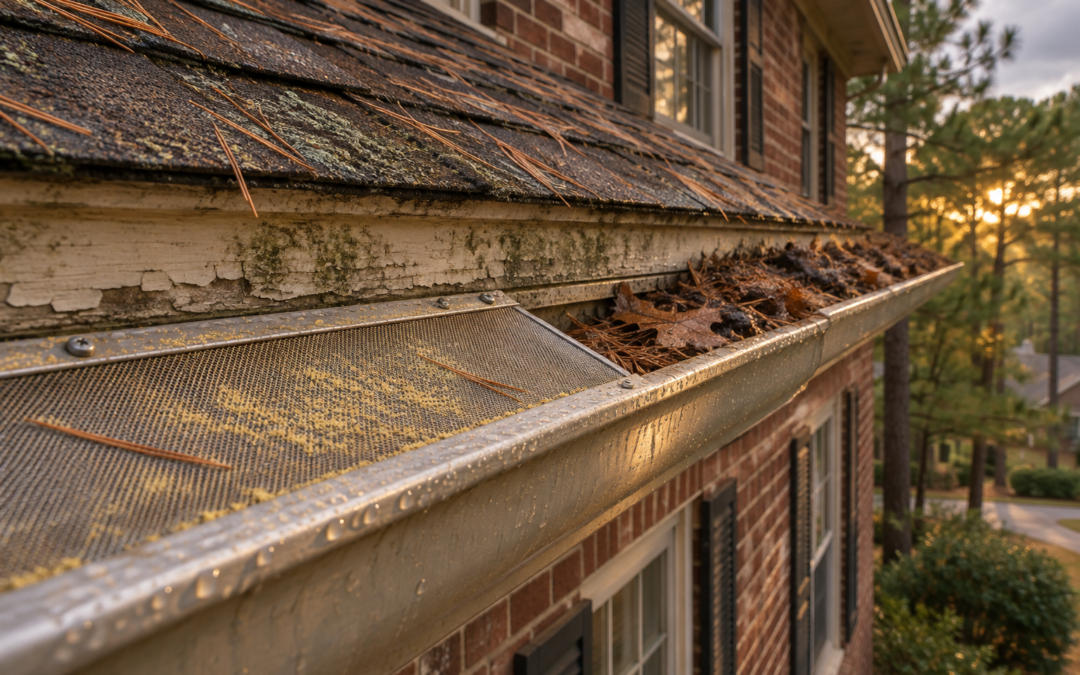
November leaf fall in Raleigh is heavy. Even if you cleaned gutters in October, check them again before December. A gutter half-full of wet leaves weighs considerably more than it’s supposed to, which can pull the gutter away from the fascia over time.
You can often see whether gutters are overflowing during a rain without getting on a ladder. If water pours over the front edge of the gutter rather than flowing toward the downspout, there’s likely a blockage.
Check That Gutters Are Seated and Pitched Correctly
Gutters need a slight downward slope toward the downspout so water drains rather than pools. If you see standing water in a gutter after a dry day, the slope has shifted. Gutters also pull away from the fascia at the hangers (the brackets that attach them to the house) over time, especially after a heavy storm. Look for gaps between the back of the gutter and the fascia board.
If your gutters are repeatedly pulling loose or overflowing despite being clean, our gutter guards page explains the options for reducing maintenance. The Gutter Guards Raleigh NC: Cost, Types, and Are They Worth It? post walks through which systems perform best in this area’s tree canopy.
Inspect Downspouts and Extensions
Downspouts carry water from the gutters down to ground level. Extensions at the bottom direct that water away from the foundation. Make sure each downspout is securely attached to the gutter at the top and to the house at the lower bracket. Check that the extension at the bottom hasn’t been kicked aside or clogged with debris.
Water that empties right at the foundation can cause basement or crawl space moisture problems over winter. FEMA’s flood mitigation guidance recommends directing downspout discharge at least six feet from the foundation as a basic home protection measure.
Look for Rust, Cracks, and Loose Joints
Metal gutters develop rust spots and small cracks over time. These are worth patching before winter, since freezing water expands and can turn a hairline crack into a split. If your gutters have multiple failing sections, our gutters page explains the difference between repair and replacement. The How to Know When Your Home Needs New Gutters in NC post helps you think through that decision.
When to Call a Roofer Before December
Call a roofer if your checklist turns up any of the following:
- Missing, curled, or cracked shingles
- Flashing that is visibly separated or rusted through
- Daylight visible from inside the attic
- Any sagging in the roof deck or rafters
- Water staining on attic wood that you can’t explain
- Gutters that keep pulling away from the fascia despite cleaning
Some items on this list you can handle yourself, like clearing gutters or repositioning a downspout extension. Others need a professional.
Small leaks get worse through winter, so it’s worth having those looked at before temperatures drop consistently. A professional inspection gives you a clear picture of what needs attention now and what can wait until spring. Wilson & Sons Roofing offers roof inspections and roof maintenance services for homes throughout the Raleigh area.
Frequently Asked Questions
How often should I clean my gutters before winter in Raleigh, NC?
Most Raleigh homes with nearby trees benefit from cleaning gutters twice in fall: once in mid-October after the first big drop, and again in mid-to-late November after most leaves have fallen. If you have a lot of pine trees, fine needles can clog gutters faster than broad leaves, so check more frequently. The goal is to have clear gutters going into December before freezing temperatures arrive.
Can I do a pre-winter roof inspection myself?
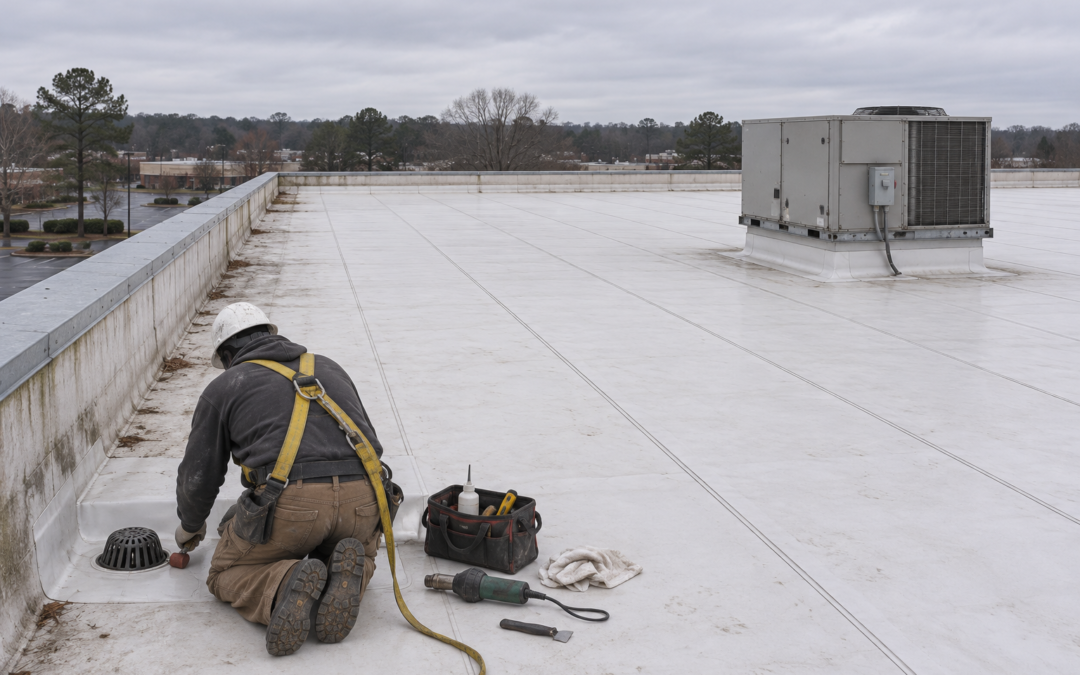
You can do a lot of the work from the ground and from inside your attic, and those checks are genuinely useful. What a homeowner can’t safely do is walk the roof surface to check flashing up close, probe soft spots in the decking, or assess the condition of pipe boot seals around vents. A professional inspector can reach those areas safely and knows what to look for before it shows up as a leak inside.
Does Raleigh get ice dams, and do I need to worry about them?
Ice dams form when heat escaping through a poorly insulated attic melts snow near the ridge, and that water refreezes at the cold eave overhang, backing up under shingles. Raleigh doesn’t get the sustained snow cover that makes ice dams a constant problem in northern states, but the area does see ice storms and brief heavy snow events. If your attic is poorly ventilated or under-insulated, even a moderate winter event can cause a dam. Fixing attic ventilation and insulation before December is the best prevention.
My roof is only six years old. Do I still need to run this checklist?
Yes, age alone doesn’t guarantee a roof is problem-free. Flashing can fail on a newer roof after a storm. Gutters pull loose regardless of shingle age. Installation defects sometimes show up only after a few years of weathering. A quick checklist takes under an hour and can catch something early enough to fix under a labor warranty.
How do I know if my gutters need replacement versus just a repair?
Repair usually works when the problem is a single cracked section, a loose bracket, or a clogged downspout. Replacement makes more sense when gutters are sagging along multiple runs, have widespread rust or corrosion, or keep separating at the seams despite repeated repairs. A contractor can tell you which situation you’re in after a quick look. The general rule: if you’re patching the same gutter in the same spot more than twice, replacement is probably the more cost-effective path.
Is November too late to fix a roof problem before winter in the Triangle?
November is not too late. Roofing crews work through fall and into winter, and mild days are common in the Triangle through December. Most shingle manufacturers, including CertainTeed and GAF, allow installation down to 40°F, and sealants set properly at those temperatures. The practical concern is scheduling: contractors get busy with storm damage calls and year-end repairs in November, so the sooner you call, the more flexibility there is.
Ready to Work Through This Roof and Gutter Checklist Before December?
Wilson & Sons Roofing has been serving Raleigh homeowners since 1996, and a pre-winter inspection is one of the most straightforward services we offer.
Get your quote, no cost, no hassle or call us at (919) 787-3253 to set up a complimentary roof and gutter inspection before cold weather settles in.