If a water stain just appeared on your ceiling, or a shingle landed in the yard after a cold snap, your home may need roof repair. In Durham, NC, most winter roof problems start as small issues in the fall that freeze, thaw, and grow. Catching them early is almost always cheaper than fixing what follows.
5 Signs You May Need Roof Repair in Durham, NC
The five signs below are things you can spot from the ground, from an upstairs window, or from inside your attic with a flashlight. You don’t need to get on the roof, and you shouldn’t. A trained inspector can access the surface safely; a homeowner on a cold, damp roof is a different story.
Sign 1: Shingles That Are Missing, Curling, or Lifting at the Edges
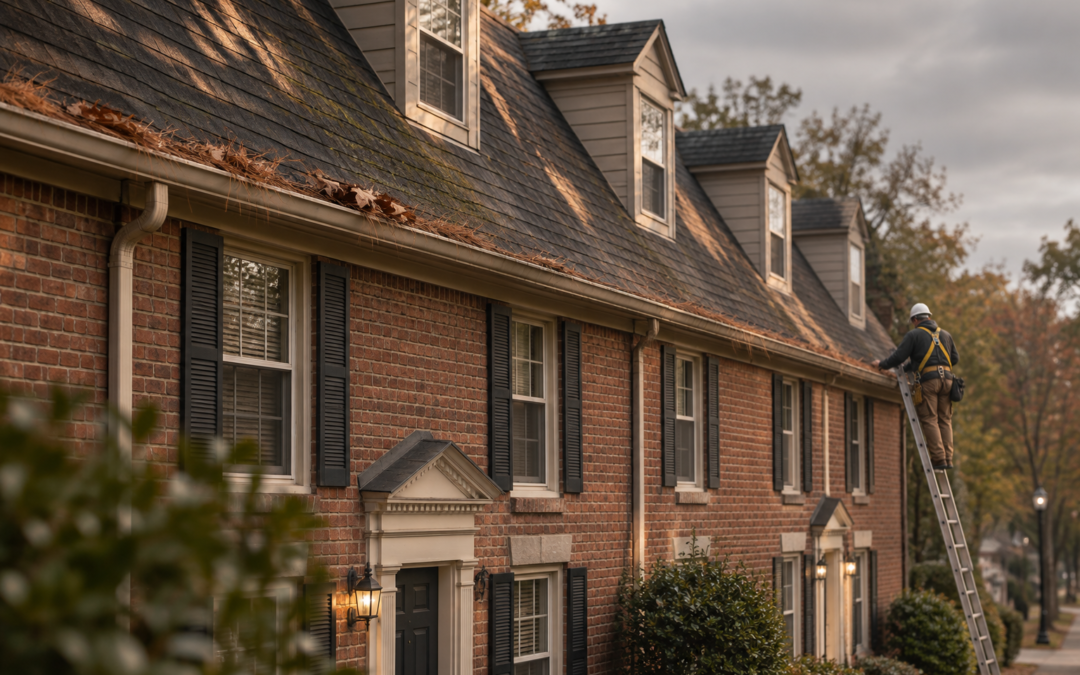
Asphalt shingles lie flat when they’re healthy. Shingles buckling upward at the corners, or pulling away from the surface, are a problem you can often spot from the driveway. Wind gets underneath a lifted shingle and can tear it off entirely. The exposed wood beneath absorbs rain quickly.
Missing shingles leave the decking (the wood panels that form the structural base of your roof) completely open to water. Durham gets meaningful winter rainfall, and even a small gap lets moisture in. A few replacement shingles is a straightforward repair when caught early.
Sign 2: Granules Collecting in Your Gutters
Asphalt shingles are coated in tiny mineral granules. Those granules shield the asphalt layer from UV rays and weathering, so when they wear away, the shingle underneath ages much faster. The National Roofing Contractors Association considers granule loss one of the clearest early indicators of shingle wear.
After rain, check your gutters. A handful of granules now and then is normal on a newer roof. Steady, heavy granule loss in the gutters, especially concentrated below one section of the roof, points to shingles that are past their prime. Our post on the importance of shingle granules goes deeper on what to look for and why it matters.
Sign 3: Water Stains on Ceilings or Attic Rafters
A yellow or brown ring on a ceiling is water that soaked through, spread out, and dried. The stain shows you where water ended up, not where it came in. Grab a flashlight and check your attic rafters and the underside of the roof decking on a dry day. Dark staining, soft spots, or any daylight visible through the boards all point to a breach somewhere on the roof surface.
Small leaks do tend to grow over time, so having a roofer look at it soon makes sense. Our step-by-step guide for a leaky roof walks you through what to do while you’re waiting for an inspection.
Sign 4: Flashing That’s Cracked, Rusted, or Pulling Away
Flashing is the thin metal (usually aluminum or galvanized steel) installed wherever the roof meets something else: a chimney, a skylight, a wall, or a valley where two roof slopes join. Its job is to seal those joints so water runs off instead of seeping in. Flashing is one of the most common sources of roof leaks because it expands and contracts with temperature changes, and older flashing can crack, rust, or lift at the edges.
From the ground, binoculars help. Look for metal around the chimney base or along roof valleys that appears buckled, discolored, or separated from the surface. A roofer can re-seal or replace flashing without touching the rest of the roof.
Sign 5: Ice Dams Forming Along the Eaves
Durham doesn’t see harsh winters every year, but ice events do happen. An ice dam forms when heat escaping from the living space below warms the upper part of the roof, melts snow there, and that melt water runs down and refreezes at the cold eave (the lower edge of the roof that overhangs the wall). The ice backs up under shingles and forces water into the attic.
Ice dams are really a symptom of an attic insulation and ventilation problem, but they cause very real shingle and decking damage in the meantime. If you’ve seen ice building up along the lower edge of your roof in past winters, it’s worth having both the roof and the attic checked before the next cold spell arrives. The Insurance Institute for Business and Home Safety has published guidance on how ice dams form and how proper attic insulation reduces the risk.
What to Do First After Spotting a Problem
Seeing one of these signs doesn’t automatically mean you need a new roof. Many of them point to repairs that are targeted, relatively quick, and far less expensive than a full replacement. Here’s how to handle it in order:
- Document what you see from the ground. Take photos on your phone, including the gutter granules, the stained ceiling, or the lifted shingles. Timestamps matter if an insurance claim becomes relevant later.
- Check your attic. On a dry day, go up with a flashlight and look for water staining, soft wood, mold, or daylight. Write down or photograph what you find.
- Keep water out temporarily if needed. If you have an active drip inside the house, place a bucket and put a tarp or towel below the spot. Don’t try to patch the roof yourself, especially on a cold or wet day.
- Schedule a professional roof inspection. A roofer can safely access the roof, identify the exact source of any leak, and tell you whether a repair will solve it or whether the roof has broader problems. Wilson & Sons Roofing offers roof inspections for Durham homeowners.
- Ask for a written estimate before any work starts. You should know what’s being done, why, and what it will cost. No deposit should be required before work begins.
How Durham’s Winter Weather Affects Roofs
Durham averages roughly 44 inches of rain per year, according to NOAA climate data, with December through February bringing a mix of rain, sleet, and occasional ice. That freeze-thaw cycle is harder on roofing materials than steady cold. Water gets into a small crack, freezes, expands, and makes the crack bigger. By spring, what was a minor flashing gap becomes a sizable entry point for water.
Homes in Durham’s older neighborhoods often have roofs that have been patched multiple times. That layering can hide deterioration on the decking underneath. An inspection that includes attic access gives a much clearer picture than a visual check from the ridge alone.
Proper attic ventilation also matters during winter. The U.S. Department of Energy notes that inadequate attic insulation drives the heat loss that creates ice dams and accelerates shingle aging from the underside. If your energy bills climbed this fall, your attic may be part of why your roof is struggling.
Repair or Replace: How to Know Which One You Need
The honest answer is that it depends on how much of the roof is affected. A roofer who recommends a full replacement on a 10-year-old roof with two missing shingles and solid decking beneath them is not giving you good advice. Targeted shingle repair, flashing work, and re-sealing around penetrations are legitimate solutions when the damage is local.
Full replacement starts to make sense when the decking has widespread soft spots, when shingles are losing granules across most of the surface, or when the roof is approaching the end of its rated lifespan. The Insurance Institute for Business and Home Safety publishes guidance on roof system performance that’s worth reading if you’re trying to understand what a roof’s remaining life actually looks like.
Wilson & Sons Roofing has been family-owned since 1996, and the approach is straightforward: if a repair will solve the problem, that’s what gets recommended. You can read more about the full range of residential roofing services the company offers in Durham and across the Triangle.
Frequently Asked Questions
How do I know if my Durham roof needs repair or a full replacement?
The key factors are the age of the roof, how much of the surface is damaged, and the condition of the decking underneath. If damage is limited to a few shingles or a flashing joint, a repair usually makes sense. When granule loss is widespread, the decking has soft spots, or the roof is nearing the end of its rated lifespan, a full replacement is worth discussing. An in-person inspection gives you the clearest answer.
What causes roof leaks in Durham homes during winter?
The most common culprits are failed flashing around chimneys and roof valleys, shingles that have lifted or gone missing, and cracked sealant around pipe boots (the rubber seals around plumbing vents). The freeze-thaw cycle that Durham sees most winters widens small gaps quickly. Many winter leaks trace back to a small problem that existed before the first cold snap.
Is roof repair in Durham, NC expensive?
Cost depends entirely on the type and extent of the damage. Minor shingle repairs and flashing re-sealing are generally far less expensive than a full replacement. The realistic cost breakdown for North Carolina roofing on the Wilson & Sons Roofing blog can help you understand what different scopes of work typically involve. The only way to get an accurate number for your specific roof is an in-person inspection and written estimate.
Can I safely check my roof myself?
You can check quite a bit from the ground, with binoculars if you have them, and from inside the attic. Look for missing or curling shingles, granules in the gutters, water stains on attic rafters, and buckled flashing around the chimney. Getting on the roof yourself, especially in winter, is not safe. Wet shingles and cold temperatures create serious fall risk, so leave the surface inspection to a professional.
Is it a misconception that you should wait until spring to fix a roof leak?
Yes. Waiting gives water more time to damage the decking, insulation, and potentially the ceiling below. Roofers work through winter, and a repair done in December on a dry day is far less expensive than repairing both the roof and the water-damaged interior come March. If weather prevents a permanent fix right away, a roofer can apply a temporary cover to stop water from getting in while you schedule the full repair.
How often should a Durham home’s roof be inspected?
Most roofing professionals recommend an inspection once a year, plus any time after a significant wind or hail event. Fall is a practical time because it catches summer storm damage before winter rain arrives. The NC Department of Insurance also suggests regular inspections as part of maintaining your home’s coverage eligibility, though requirements vary by policy.
Ready to find out exactly what your Durham roof needs this winter?
Wilson & Sons Roofing has served Durham and the Triangle since 1996, and an inspection is the fastest way to know whether you’re looking at a small repair or something bigger.
Get your quote, no cost, no hassle or call (919) 787-3253 to schedule an inspection for your Durham home.