If you’re a Wake Forest homeowner researching shingle replacement, you probably want a straight answer: what does the process look like, how long does it take, and how do you know you’re making the right call? This post walks you through every stage of shingle replacement in Wake Forest, NC, from the first sign of trouble to the day the crew cleans up and leaves.
How Do You Know It’s Time for Shingle Replacement in Wake Forest, NC?
Most roofs don’t fail all at once. They give you warning signs for a year or two before water gets inside. Knowing what to look for from the ground, or from your attic, can help you act before a repair turns into a bigger problem.
Signs you can check from the ground or attic:
- Curling or cupping shingles. The edges of a shingle lift when the asphalt dries out with age. You can often spot this from the driveway on a sunny day.
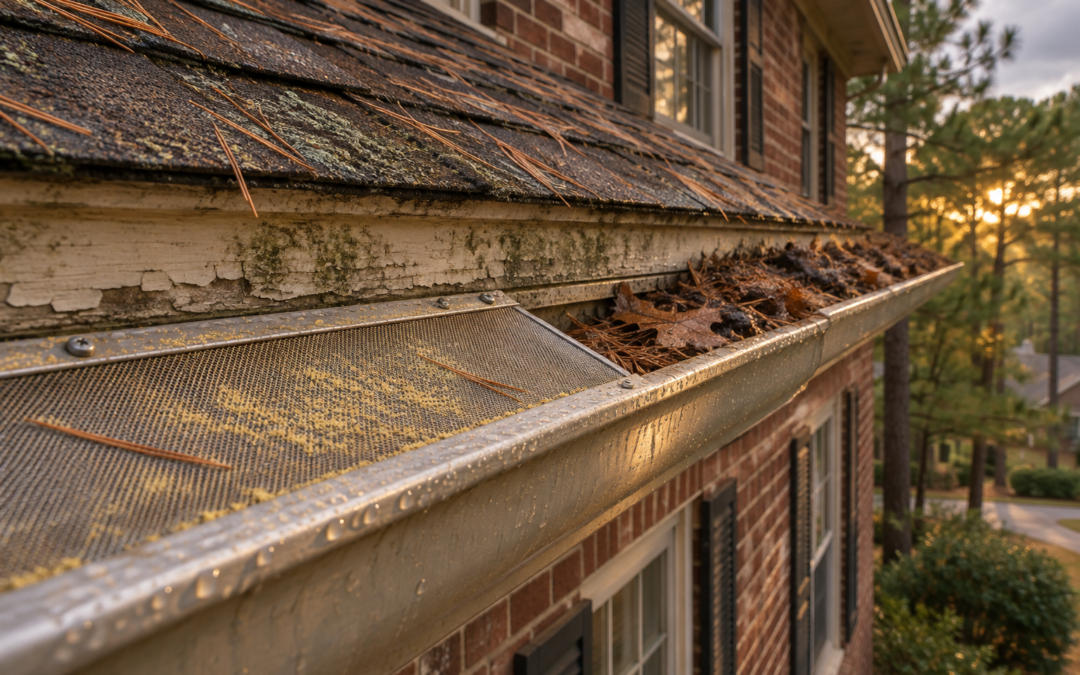
- Granule loss. Granules are the tiny mineral particles embedded on the surface of a shingle. They shield the asphalt from UV rays, so bald patches let the sun break down the shingle much faster. Check your gutters: heavy granule buildup is a reliable sign the shingles are wearing out. Our post on the importance of shingle granules explains what to look for.
- Daylight in the attic. If you can see light coming through the roof boards from inside your attic, the deck, the structural wood underneath the shingles, is compromised.
- Water stains on ceilings or walls. A leak shows up inside the house long after it starts at the roof. If you see staining, have the roof inspected soon. Small leaks get worse over time.
- Age of the roof. The National Roofing Contractors Association notes that standard three-tab asphalt shingles typically last 15 to 20 years, while architectural shingles, which have a layered, dimensional profile and thicker construction, often last longer under normal conditions. If your Wake Forest home was built or re-roofed in the early 2000s or before, age alone is worth a conversation.
None of these signs automatically means you need a full replacement. A professional inspection will tell you whether a targeted repair covers it. Wilson & Sons won’t recommend a new roof unless you truly need one.
Repair or Replace: How a Roofer Makes That Call
A repair is usually the right answer when damage is limited to a small section of the roof and the rest of the shingles are in good shape. Replacement makes more sense when:
- The roof is near or past its expected lifespan
- Damage covers a large portion of the surface
- Multiple layers of old shingles are already in place (most building codes allow only two layers before a full tear-off is required)
- The decking, the plywood or OSB boards under the shingles, is rotted or structurally weak
An in-person inspection is the only way to get a reliable answer. You can read more about what that process covers on our roof inspections page.
What Shingle Options Do Wake Forest Homeowners Have?
Once you’ve decided to replace, you’ll choose between a few main shingle types. Each has a different profile, price range, and lifespan.
Three-Tab Shingles
Three-tab shingles are the flat, single-layer option you see on many older homes. They’re the lightest and least expensive option, but they don’t add much dimension to a roofline and tend to have shorter lifespans than thicker products.
Architectural (Dimensional) Shingles
Architectural shingles are thicker and layered to create a textured, shadow-line look. They’re the most popular choice in the Triangle right now, and for good reason. They handle wind and weather better than three-tab shingles, and they add curb appeal. Products like CertainTeed Landmark and GAF Timberline are common choices, and Wilson & Sons is certified to install both.
Impact-Resistant Shingles
Impact-resistant shingles are built with a reinforced mat that holds up better against hail. The Insurance Institute for Business and Home Safety has tested these products extensively, and some insurers offer a premium discount for homes with qualifying shingles. Check with your insurer to find out whether your policy includes that benefit.
Designer and Premium Shingles
These mimic the look of wood shake or slate at a fraction of the weight and cost. They’re a good fit for homes where curb appeal matters and the budget allows for it.
For a detailed look at the case for architectural shingles, see our post Why You Should Consider Architectural Shingles.
What Does Shingle Replacement Actually Cost?
There’s no single number that fits every Wake Forest home. Roof size, pitch (how steep the roof is), shingle grade, and the condition of the decking underneath all affect the final price. Our post What Does a New Roof Cost in North Carolina? breaks down the factors in detail and links to current industry data.
What we can say plainly: the real number comes from an in-person measurement and inspection. Any figure quoted over the phone without seeing your roof is a guess.
What Happens on Installation Day?
Knowing what to expect makes the whole process less stressful. Here’s how a typical shingle replacement goes, step by step.
- Crew arrives and sets up protection. Tarps go down over landscaping, air conditioning equipment, and anything else near the work area. A magnetic roller will come through at the end to pick up stray nails.
- Tear-off. The old shingles are stripped down to the decking. This is the noisiest part of the job.
- Decking inspection. Once the old material is off, the crew inspects every sheet of plywood or OSB for soft spots, rot, or damage. Any bad sections are replaced before anything else goes on.
- Underlayment installation. Underlayment is a water-resistant layer, usually a synthetic felt or rubberized membrane, that goes directly on the decking before shingles are nailed down. It’s your roof’s secondary barrier if water ever gets under a shingle.
- Flashing installation or replacement. Flashing is thin metal (usually aluminum or galvanized steel) that seals the joints where the roof meets a wall, chimney, skylight, or valley. Old or corroded flashing is a common source of leaks and is replaced as part of a quality installation.
- Shingle installation. New shingles are nailed in overlapping rows, starting at the eave and working toward the ridge.
- Ridge cap installation. The ridge cap covers the peak of the roof with specially folded shingles designed for that exposed edge.
- Cleanup and nail sweep. The crew hauls away the old material and runs a magnetic roller over the yard, driveway, and any areas where nails could have landed.
- Final walkthrough. A supervisor checks the finished roof before the crew leaves. You can walk the perimeter from the ground and ask questions.
Most residential replacements in Wake Forest take one to two days, depending on roof size and complexity. Weather delays are possible, and your contractor should communicate any changes clearly.
What to Ask Before You Sign a Contract
A few direct questions will tell you a lot about a contractor before work begins.
- Are you licensed with the NC Licensing Board for General Contractors?
- Do you carry general liability and workers’ compensation insurance? (Ask for certificates.)
- What does the warranty cover, and for how long? Ask separately about the manufacturer’s material warranty and the contractor’s labor warranty.
- Will you handle the permit if one is required? Wake Forest requires a building permit for most full roof replacements.
- What is the payment schedule? A contractor who requires full payment upfront before work starts is a warning sign.
Wilson & Sons requires no deposit before work begins and backs its installations with a 20-year labor warranty.
How Long Will the New Roof Last?
Lifespan depends on the shingle grade, how well the installation was done, and how the roof is maintained afterward. Regular inspections, keeping gutters clear, and trimming overhanging branches all extend the life of a new roof. Our year-round roof maintenance calendar gives Wake Forest homeowners a practical schedule to follow after installation.
Frequently Asked Questions
How long does shingle replacement take for a typical Wake Forest home?
Most single-family homes in Wake Forest take one to two days from tear-off to cleanup. Larger or more complex rooflines, steep pitches, or significant decking repairs can add time. Your contractor should give you a realistic timeline before work begins, not after.
Does a full shingle replacement require a permit in Wake Forest, NC?
Yes, Wake Forest requires a building permit for most full roof replacements. A reputable contractor handles the permit as part of the job. Skipping the permit can create problems when you sell the home, so confirm this before signing any contract.
Is it true that you can install new shingles over old ones to save money?
This is a common question, and the short answer is: sometimes, but not always a good idea. Most building codes allow a second layer of shingles over an existing one, but no more than two layers total. Installing over old shingles traps moisture, adds weight to the structure, and hides decking problems the crew can’t see without tearing off. Many contractors, including Wilson & Sons, recommend a full tear-off so the decking can be inspected properly.
Will my homeowner’s insurance pay for shingle replacement in Wake Forest?
Whether your insurer covers shingle replacement depends entirely on your specific policy and the cause of the damage. Insurance typically covers sudden events like storm or hail damage, not normal wear over time. Coverage decisions are made by your insurer’s adjuster. Wilson & Sons can document damage thoroughly and provide a detailed estimate, and can meet an adjuster on site, but the claim outcome is between you and your insurer.
How do I know if I need a full replacement or just a repair?
A repair is usually the right call when damage is limited to a small area and the rest of the shingles are in solid condition. Replacement makes more sense when the roof is old, damage is widespread, or the decking underneath is compromised. The only way to know for certain is an in-person inspection. If you’ve had a recent leak and aren’t sure where to start, our guide on what to do if you have a leaky roof walks through the first steps.
What time of year is best for shingle replacement in Wake Forest?
Shingles can be installed in any season, but fall and spring tend to offer the most stable weather for curing and sealing. November in particular is a good window: temperatures are still mild enough for proper installation, and getting ahead of winter prevents small problems from worsening when cold and rain arrive. That said, a qualified crew can work safely in winter conditions too, and waiting for the “perfect” season is rarely worth leaving a compromised roof over your head.
Ready to get a clear picture of your Wake Forest roof?
If you’ve been putting off a conversation about shingle replacement, an inspection is the fastest way to know what you’re actually dealing with and whether repair or replacement is the right call.
Get your free quote, no cost, no hassle or call us at (919) 787-3253.