A multi-family roof installation in Raleigh, NC is not simply a larger version of a single-family job. It involves multiple residents, board or ownership approvals, capital reserve budgets, and sometimes dozens of units under a single contract. Understanding what that process looks like before you sign anything will save your community time, money, and headaches.
What Makes Multi-Family Roof Installation Different in Raleigh, NC
A multi-family roof installation in Raleigh, NC differs from a residential job in four main ways: scale, decision-making, occupant coordination, and system type. Where a homeowner makes one call and one decision, a property manager or HOA board often needs board votes, reserve fund drawdowns, and written notice to residents before a crew sets foot on the property.
Raleigh’s growth has added thousands of townhome, condo, and apartment units over the past decade. Many of those communities are now reaching the age where original roofs need replacement, not just repair. If your property falls into that category, the planning you do now determines whether the project goes smoothly or drags on with change orders and complaints.
Roof Types Common on Multi-Family Properties
The system your community needs depends on the building type.
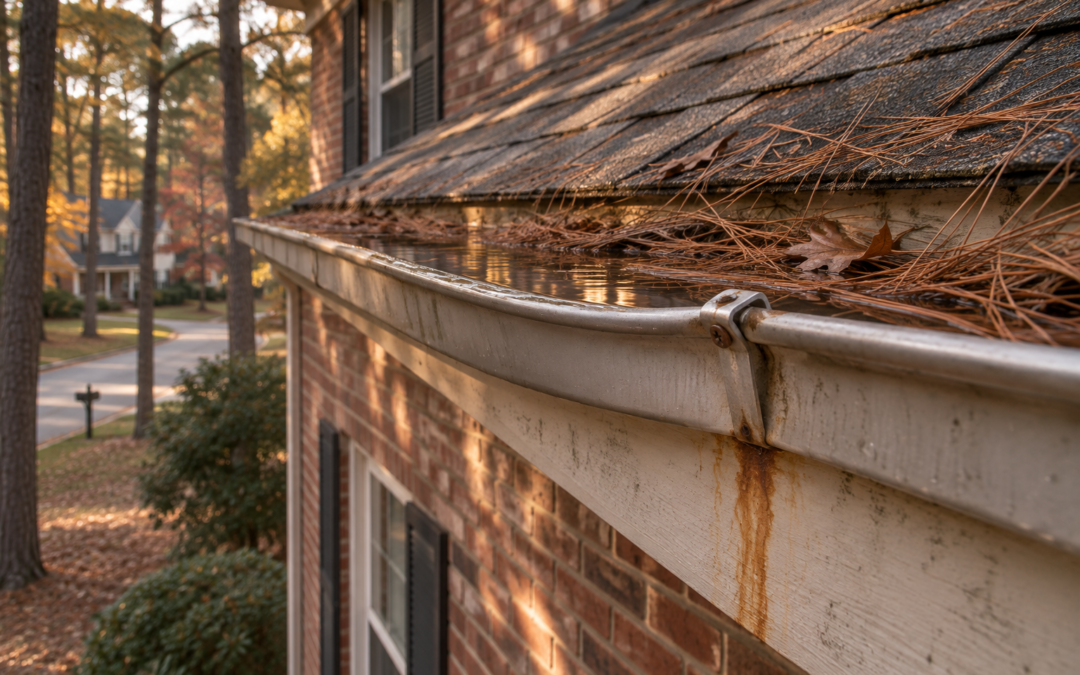
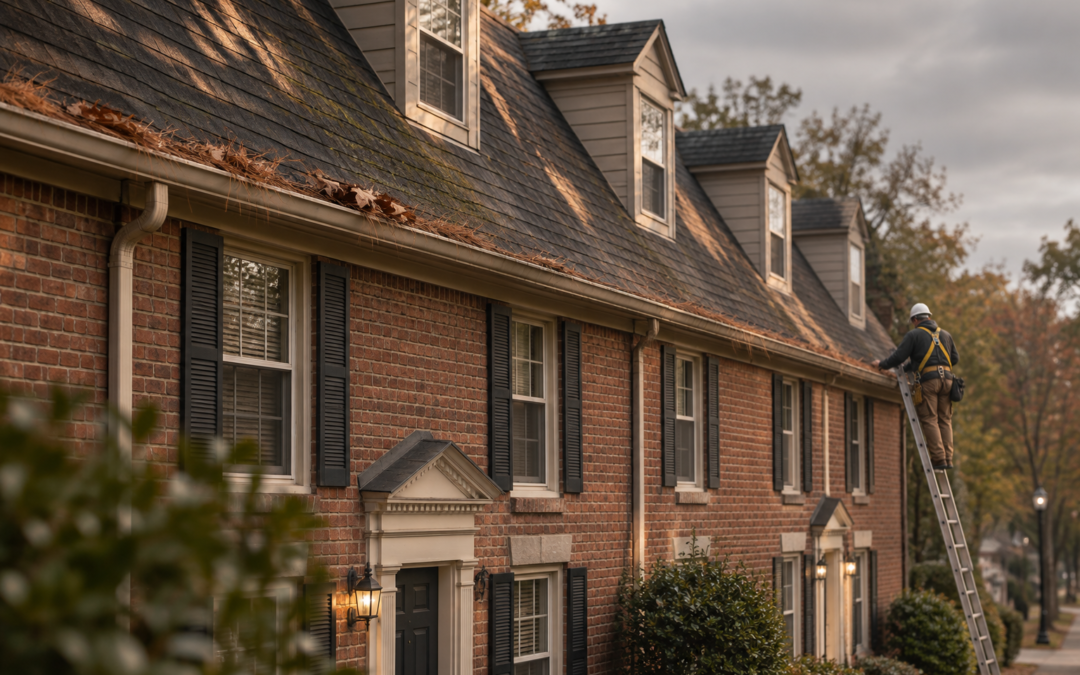
- Steep-slope roofs (townhomes, condo buildings with pitched roofs): typically use asphalt shingles or metal roofing. These look similar to residential roofs but cover far more square footage spread across shared structures.
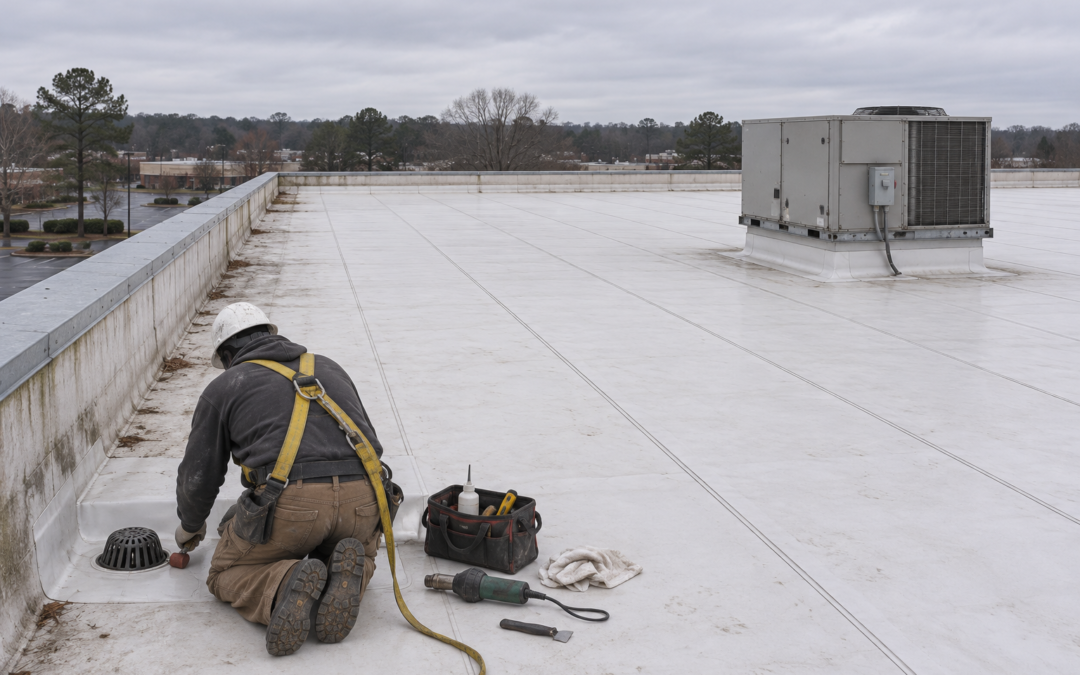
- Low-slope or flat roofs (apartment buildings, condo towers, carport canopies): typically use TPO, EPDM, or modified bitumen. TPO is a white or gray single-ply membrane; EPDM is a black rubber membrane. Both are designed for roofs with little to no pitch where water drains rather than sheds.
- Mixed systems: many Raleigh-area communities have both. A townhome cluster might have pitched roofs on the units and a flat roof over a clubhouse or breezeway.
Knowing which system or combination you have tells you which contractors to call. A roofer who works only on steep-slope shingle roofs is not the right fit for a building with a TPO membrane. Our low-slope roof repair and installation guide for Raleigh, NC goes deeper on flat-roof systems if that is what your property has.
How HOA Boards and Property Managers Should Prepare
Before a contractor arrives for an estimate, your side of the table should be organized. Contractors give better scopes of work when they know what you know.
Step 1: Pull Your Reserve Study and Maintenance Records
A reserve study is a financial document that estimates when major components, including roofs, will need replacement and how much it will cost. If your HOA commissioned one in the last few years, pull it now. It will tell you the remaining useful life the engineer projected and the per-unit cost assumption. That number may be outdated, but it gives every contractor a baseline to work from.
If you don’t have a recent reserve study, the Community Associations Institute is the leading national resource for HOA governance and financial planning.
Also gather any maintenance or repair history. A roof that has had the same section repatched three times is telling you something. Contractors who see that history can give you a more accurate scope.
Step 2: Understand What Your Governing Documents Require
Most HOA declarations and condo bylaws specify who has authority to approve capital expenditures above a certain dollar amount. Some require a full board vote; others require a vote of the membership. Some set competitive bid requirements. Know your threshold before you get quotes, because a contract signed without the required approval can be challenged later.
The NC Department of Insurance maintains guidance on property insurance for community associations, which is worth reviewing before your board meeting.
Step 3: Plan Your Communication to Residents
Residents need advance notice. Work on steep-slope roofs is loud. Crews will be in parking lots and walking around units. If a building has a low-slope roof that requires the membrane to be fully removed and replaced, there may be a window where the deck, the structural wood or concrete beneath the membrane, is briefly exposed.
A simple written notice covering start date, estimated duration, what areas will be affected, and who to contact with questions goes a long way toward avoiding complaints. Your contractor should be able to give you those details before work begins.
Choosing the Right System for Your Property
System selection on a multi-family property is a bigger decision than on a single home, because you are committing to a material and warranty structure that will cover the whole community for decades.
Steep-Slope Options
Asphalt architectural shingles are the most common choice for townhome and condo communities with pitched roofs. They carry manufacturer warranties and can be color-matched across buildings to maintain a consistent appearance. CertainTeed’s architectural shingle lines and GAF’s architectural products are both options Wilson & Sons installs. Manufacturers publish their own warranty terms at CertainTeed.com and GAF.com; read them carefully, because coverage varies by product tier and installation requirements.
Metal roofing costs more upfront but lasts longer and requires less maintenance. For communities where the reserve study projects a 50-year horizon, metal can be worth the difference in first cost.
Low-Slope Options
TPO (thermoplastic polyolefin) reflects heat, which matters for flat roofs that absorb direct sun all day. The ENERGY STAR program rates roofing products for reflectivity; a qualifying TPO membrane can reduce cooling loads on upper-floor units.
EPDM (ethylene propylene diene monomer) is a durable rubber membrane with a long track record. It is typically black, which absorbs heat, but white-coated EPDM options are available. EPDM is often chosen for roofs with complex penetrations, the pipes, vents, and HVAC curbs that poke through a flat roof, because it is flexible and seals well around irregular shapes.
Modified bitumen is an asphalt-based membrane applied in layers. It performs well on roofs that see foot traffic from HVAC technicians.
For a deeper look at maintaining low-slope systems after installation, see our low-slope roof maintenance seasonal schedule for Raleigh, NC.
Scheduling and Logistics on a Lived-In Property
The hardest part of a multi-family roof installation is not the material choice. It is the scheduling. People live there.
Phasing the Work
Large communities are almost always done in phases. A good contractor will propose a phasing plan that keeps exposed decking to a minimum at any given time, sequences work to avoid trapping residents or blocking emergency access, and builds in buffer days for weather.
Raleigh averages around 46 inches of rain per year, according to National Weather Service data, so any multi-week project needs a rain contingency built in. Ask every contractor how they handle a week of unexpected rain and what that does to the schedule and cost.
Working Around Residents
Some practical details that separate an experienced multi-family contractor from one who is new to this type of work:
- Will they provide residents with daily start and stop times?
- How do they handle debris and dumpster placement in shared parking areas?
- What is their process if a unit shows interior damage during the project?
- Who is the single point of contact for the property manager?
Get the answers in writing before you sign.
Permits and NC Licensing
North Carolina requires a roofing contractor to hold the appropriate license for the scope of work. The NC Licensing Board for General Contractors lets you verify a license online. Any project above a certain dollar threshold also requires a building permit from the local jurisdiction. In Raleigh, that means the City of Raleigh’s Development Services office. Your contractor should pull the permit; if one tells you a permit isn’t necessary for a full replacement, ask them to explain why in writing.
What to Look for in a Multi-Family Roofing Contractor
Not every roofer who handles residential work is set up for a multi-family project. Here is what to look for and ask about.
- Manufacturer certifications: Certifications like CertainTeed ShingleMaster and GAF Certified indicate a contractor has met training requirements set by the manufacturer. Those certifications also often unlock extended warranty options that a non-certified contractor cannot offer.
- Labor warranty: Ask what the contractor warrants their own work for, separate from the manufacturer’s material warranty. Wilson & Sons offers a 20-year labor warranty.
- References from similar projects: Ask specifically for references from HOAs, property managers, or multi-family communities, not just homeowners.
- Licensing and insurance: Verify both before signing. Ask for a certificate of insurance that names your association as an additional insured during the project.
- No deposit required: A reputable contractor with established supplier relationships should not require a large upfront payment. Wilson & Sons does not require a deposit.
- Financing: Ask whether the contractor can offer financing options, which is relevant when a reserve fund covers only part of the project cost.
For more context on what to expect from a roofing contractor in this market, our multi-family roof repair guide for North Carolina HOAs and property managers covers the repair side of the same relationship.
Getting Bids and Comparing Them
Comparing bids from multiple contractors is straightforward when the bids cover the same scope. The problem is they usually don’t.
One contractor may include full decking replacement; another may price only the membrane or shingles and treat decking as a per-sheet add-on discovered during tear-off. One may include new flashing, the metal or rubber strips that seal edges, valleys, and penetrations; another may reuse existing flashing to keep the number down.
Ask every contractor to provide a written scope that specifies:
- What is being removed and what is being left in place
- Whether decking will be replaced, and at what per-sheet cost if it is an allowance
- What flashing is new versus reused
- What underlayment is included (underlayment is the water-resistant layer installed under shingles or membrane, over the decking)
- The phasing plan and estimated timeline
- What happens if the project runs long due to weather
- Permit responsibility
When every bid answers those seven questions, the comparison is real. When they don’t, the low number is usually low because something is missing.
Frequently Asked Questions
How long does a multi-family roof installation take in Raleigh, NC?
Timeline depends on the size of the community, the system type, and the weather. A small townhome cluster of 10 to 15 units might be completed in one to two weeks. A larger apartment community with 50 or more units, or a low-slope system requiring full membrane replacement, could take four to eight weeks or longer with phased scheduling. Ask your contractor for a written phasing plan with built-in weather contingency before work begins.
Does our HOA need a permit for a full roof replacement in Raleigh?
Yes, in most cases. North Carolina and the City of Raleigh generally require a building permit for a full roof replacement on a multi-family property. Your roofing contractor should pull the permit as part of the job. If a contractor tells you a permit isn’t needed for a full tear-off and replacement, ask them to put that in writing and explain the basis for it.
What is the difference between a manufacturer warranty and a labor warranty on a multi-family roof?
A manufacturer warranty covers the roofing material itself, such as the shingles or membrane, against defects for a set period. A labor warranty covers the contractor’s installation workmanship. These are separate. A material that fails because it was installed incorrectly may not be covered by the manufacturer warranty; that is where the labor warranty applies. Always confirm both in writing before signing.
Can an HOA use reserve funds to pay for a roof replacement?
Generally yes, if the reserve study includes roofing as a funded component and the funds are available. However, your HOA’s governing documents and state law may impose requirements on how reserve funds can be drawn and what board authority is needed. Review your declaration and consult your association’s attorney if the amount is significant or if there is any question about authority. The Community Associations Institute is a good starting point for HOA governance guidance.
Is TPO or EPDM better for a flat-roofed apartment building in Raleigh?
Both are proven systems, and the right choice depends on your building’s specific conditions. TPO is typically preferred when solar reflectivity and cooling costs are priorities, since white TPO reflects heat. EPDM has a longer performance history and handles roofs with many penetrations well. A contractor experienced with both systems should inspect the building and give you a recommendation based on what they find, not just what they prefer to install.
What is a common misconception about multi-family roof replacement?
A common one is that the lowest bid saves the community the most money. It often doesn’t. A bid that excludes decking replacement, reuses old flashing, or skips upgraded underlayment may price lower upfront but create problems within a few years, since those components are what protect the structure between shingles and the building interior. The total cost of ownership, including the labor warranty length and the contractor’s track record on similar projects, is a better comparison point than the first number on a proposal.
Ready to plan your community’s roof replacement?
Wilson & Sons Roofing has worked with HOA boards and property managers throughout the Raleigh area since 1996, and we’re glad to walk through the scope, the system options, and a realistic timeline with you before you commit to anything.
Request a free, no-cost quote for your community or call us at (919) 787-3253. Get your quote, no cost, no hassle.