If your roof is leaking, missing shingles, or showing wear after a storm, the first question isn’t whether to call a roofer. It’s whether you need a repair or a full replacement. For most Wake Forest homeowners, the answer is a repair, and a good contractor should tell you that before quoting you a new roof.
What Wake Forest Homeowners Should Know About Roof Repair
Roof repair in Wake Forest, NC follows the same basic logic as anywhere in the Triangle: fix what’s broken, leave what’s sound, and only replace when the roof has genuinely run its course. What makes Wake Forest worth understanding on its own terms is the housing mix and the weather pattern.
Much of Wake Forest was built in waves starting in the late 1990s and continuing through the 2010s and 2020s. That means a large share of homes carry asphalt shingle roofs (the standard layered shingle product you see on most residential homes in the Triangle) that are somewhere between 10 and 25 years old. A 15-year-old roof may still have years of life left. A 22-year-old roof may be close to the end of a standard shingle’s design life, which the National Roofing Contractors Association puts at roughly 20 to 30 years for architectural shingles, depending on installation quality and exposure.
Knowing your roof’s approximate age helps you decide whether a repair is worth the investment or whether you’re patching something that will need full replacement soon anyway.
The Storm Pattern Along the US-1 Corridor
Wake Forest sits north of Raleigh along the US-1 corridor, and that position puts it in the path of fronts that track northeast through the Triangle. Hail, straight-line winds, and heavy rain are the main threats. The National Weather Service tracks severe weather events across Wake County, and the data shows that this part of the county sees its share of wind and hail events, particularly in spring and fall.
For roofing purposes, the damage these storms leave behind is usually one of three things: missing or cracked shingles, damaged flashing (the thin metal strips that seal roof edges, valleys, and penetrations like chimneys and vents), or granule loss. Granules are the small, sand-like particles embedded in the top surface of a shingle. They shield the asphalt underneath from UV radiation. When they wear away or are knocked loose by hail, the exposed asphalt ages quickly.
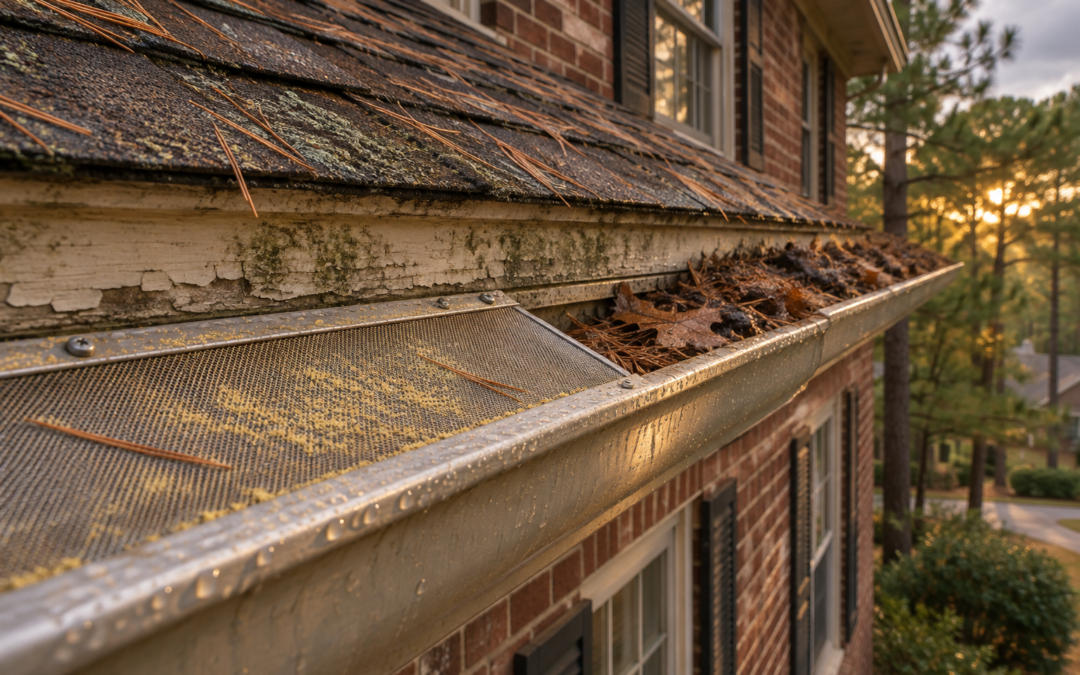
You can often spot granule loss from the ground. Look for bare or discolored patches on the shingle surface, or check your gutters after a storm. A heavy collection of granules in the gutter is a sign worth noting.
How to Decide Between Repair and Replacement
The repair-versus-replace decision comes down to three factors: the roof’s age, the extent of the damage, and what the decking looks like underneath. Decking is the plywood or OSB (oriented strand board) layer that the shingles attach to. If the decking is rotted or soft, you’re looking at a more involved job regardless of what the shingles show on the surface.
Signs That a Repair Is Likely Enough
- A few missing or damaged shingles after a single storm, with the surrounding field intact
- Flashing failure at a chimney, pipe boot, or valley, without widespread shingle deterioration
- A small active leak tracing back to a single point of entry
- A roof that’s under 15 years old with no prior repair history
Repairs like these are routine. A qualified roofer can replace individual shingles, reseal or replace flashing, and address a localized leak without touching the rest of the roof.
Signs That Replacement Deserves a Closer Look
- Widespread granule loss across multiple slopes, not just one area
- Multiple leak points or a leak that reappears after a previous repair
- Shingles that are curling, cupping, or cracking across large sections (curling means the edges are turning up; cupping means the center of the shingle is sinking)
- A roof that’s 20 or more years old and showing consistent wear
- Soft spots or visible sagging, which can point to decking damage underneath
None of these automatically mean replacement is the answer. They mean a thorough inspection is worth doing before making a decision. Our post on shingle replacement in Wake Forest walks through what a full replacement looks like if you do end up there.
What a Roof Inspection in Wake Forest Actually Covers
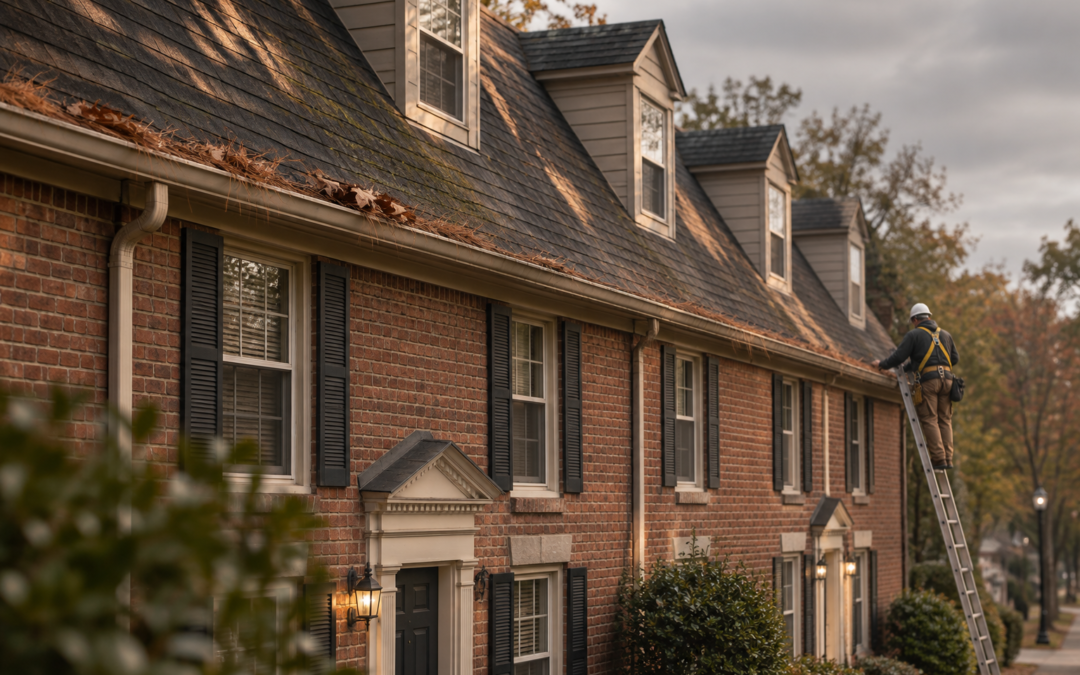
A proper inspection looks at more than the shingles. A roofer should check the flashing at every penetration and edge, the underlayment (a water-resistant layer installed between the decking and the shingles), the ridge and hip caps, the soffit and fascia (the boards along the roof’s lower edge and overhang), and the gutters.
From the ground, you can safely check for:
- Missing, curled, or visibly cracked shingles
- Granule buildup in gutters or at downspout exits
- Sagging roofline or visible dips
- Discoloration or dark streaking on the shingle surface
- Flashing that appears loose or has pulled away from a chimney or vent
Do not go onto the roof yourself. Wet or damaged roofing material is slippery, and an inspection from a professional with proper equipment and insurance protects both you and the roofer.
Inside the home, check the attic if you can do so safely. Look for daylight coming through the roof boards, water stains or dark spots on the decking, and any sign of mold or moisture around the rafters.
For a step-by-step walkthrough of what to do when you find a leak, our guide on what to do if you have a leaky roof covers the immediate steps before a roofer arrives.
For Property Managers and HOA Boards in Wake Forest
Wake Forest’s growth has brought a substantial number of townhome communities, condo developments, and apartment complexes. If you manage one of these properties, roof decisions work a bit differently than they do for a single homeowner.
The roof over a multi-family building often covers multiple units, which means a single leak can affect several residents at once. Scheduling repairs around occupied units, documenting the work for a board or ownership group, and keeping communication clear throughout the job are all part of what a qualified commercial and multi-family contractor handles.
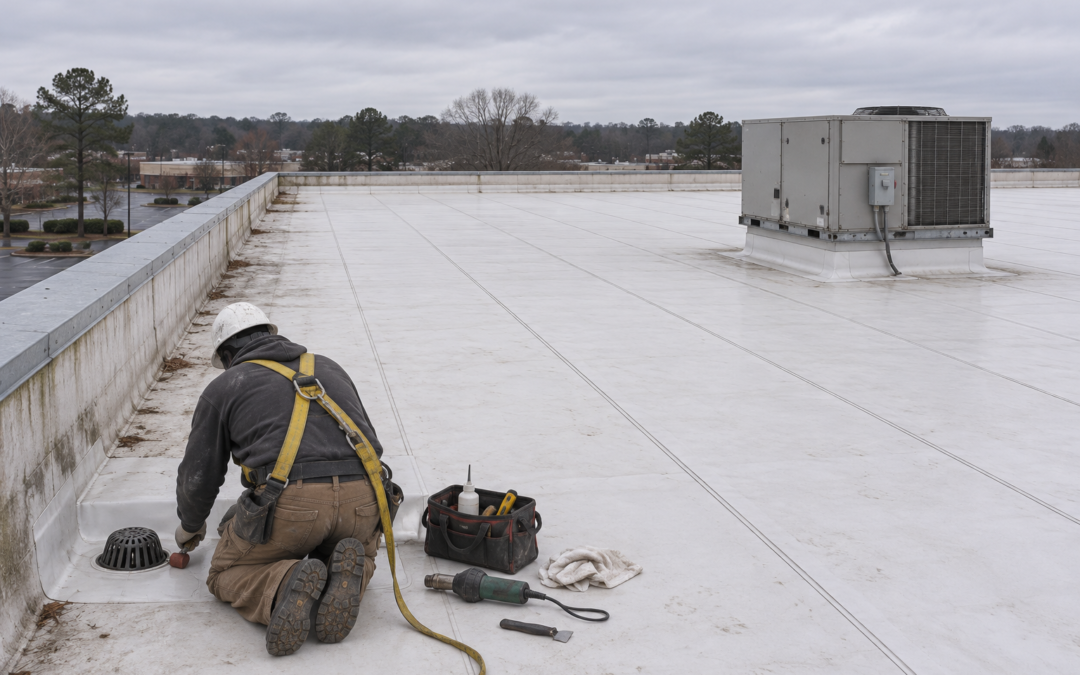
Low-slope or flat-section roofs, common on commercial buildings and some multi-family structures, use different materials than residential shingle roofs. TPO (thermoplastic polyolefin) and EPDM (ethylene propylene diene monomer) are both single-ply membrane roofing systems applied in large sheets. They require different inspection protocols and repair techniques than shingles. Our multi-family roof repair guide covers what North Carolina property managers need to know.
How to Choose a Contractor Serving Wake Forest
Wilson & Sons Roofing operates out of Raleigh and serves Wake Forest and the broader Triangle area. We don’t have a Wake Forest storefront, but we work throughout Wake County regularly.
When evaluating any roofing contractor for work in Wake Forest, check for:
- A valid NC contractor license. The NC Licensing Board for General Contractors lets you verify a license by name or number at no cost.
- Manufacturer certifications. CertainTeed ShingleMaster and GAF Certified status indicate that the contractor has met installation standards set by the manufacturer. Wilson & Sons Roofing holds both.
- A written labor warranty. Wilson & Sons Roofing provides a 20-year labor warranty on new installations.
- No deposit required. Contractors who require a large upfront payment before work begins are a common warning sign in this industry.
- Clear communication about what they found. A trustworthy roofer explains what’s damaged, shows you documentation, and tells you honestly whether a repair or a replacement is the right call.
For more on what to look for in a Triangle-area roofing contractor, our post on choosing a local roofing contractor in Raleigh covers the key questions to ask.
What About Cost?
Repair costs vary widely depending on the scope of work, the materials, and the condition of the decking. Replacement costs depend on roof size, pitch, and material choice. Our breakdown of new roof costs in North Carolina gives realistic ranges with sourced data. The number that matters for your home comes from an in-person inspection, not a general estimate.
Frequently Asked Questions
How do I know if my roof needs repair or full replacement in Wake Forest?
If the damage is limited to a few shingles, a flashing failure, or a single leak point, a repair is usually the right call. Replacement becomes the more practical option when shingles are curling or losing granules across large areas, when the roof is past 20 years old with consistent wear, or when the decking underneath has softened or rotted. An in-person inspection gives you a definitive answer.
Can I safely check my roof for damage after a storm?
Yes, but only from the ground or from inside the attic. Walk the perimeter of your home and look for missing shingles, granules in the gutters, loose flashing, or visible sagging. In the attic, check for water stains, daylight through the roof boards, or moisture around the rafters. Do not climb onto the roof; leave that to a licensed professional with proper equipment.
How long do asphalt shingles last on homes in the Triangle area?
Architectural shingles, the most common type installed in Wake Forest and the broader Triangle, are designed to last roughly 20 to 30 years according to the National Roofing Contractors Association. Actual lifespan depends on the quality of the original installation, ventilation in the attic, and the number of significant storms the roof has experienced.
Does storm damage in Wake Forest always mean I need a new roof?
Not at all. Most storm damage in this area, missing shingles, hail dings, or a flashing failure, is repairable without replacing the whole roof. A contractor who recommends full replacement after a single storm, without a thorough inspection documenting widespread damage, is worth questioning. Wilson & Sons Roofing’s approach is to recommend only what the roof actually needs.
What should I expect during a roof inspection in Wake Forest?
A thorough inspection covers the shingles, flashing, underlayment, ridge caps, decking (checked from the attic), soffit and fascia, and gutters. The roofer should give you a written summary of what they found, photos if there is damage, and a clear explanation of recommended repairs or replacement. Wilson & Sons Roofing offers free inspections with no obligation.
How does roof repair work for a townhome or condo community in Wake Forest?
Multi-family roof repair involves coordinating work across occupied units, keeping residents informed, and providing documentation for a board or property owner. The process also depends on whether the buildings use standard shingle roofing or low-slope membrane systems like TPO or EPDM, which require different materials and techniques. A contractor experienced in multi-family work schedules repairs to minimize disruption and communicates clearly at every stage.
Ready to get a straight answer about your Wake Forest roof?
Whether you’re dealing with a small leak after a recent storm or trying to decide if a 20-year-old roof still has life in it, an honest inspection is the right starting point.
Get your quote, no cost, no hassle or call (919) 787-3253 to schedule a free inspection for your Wake Forest home or property.