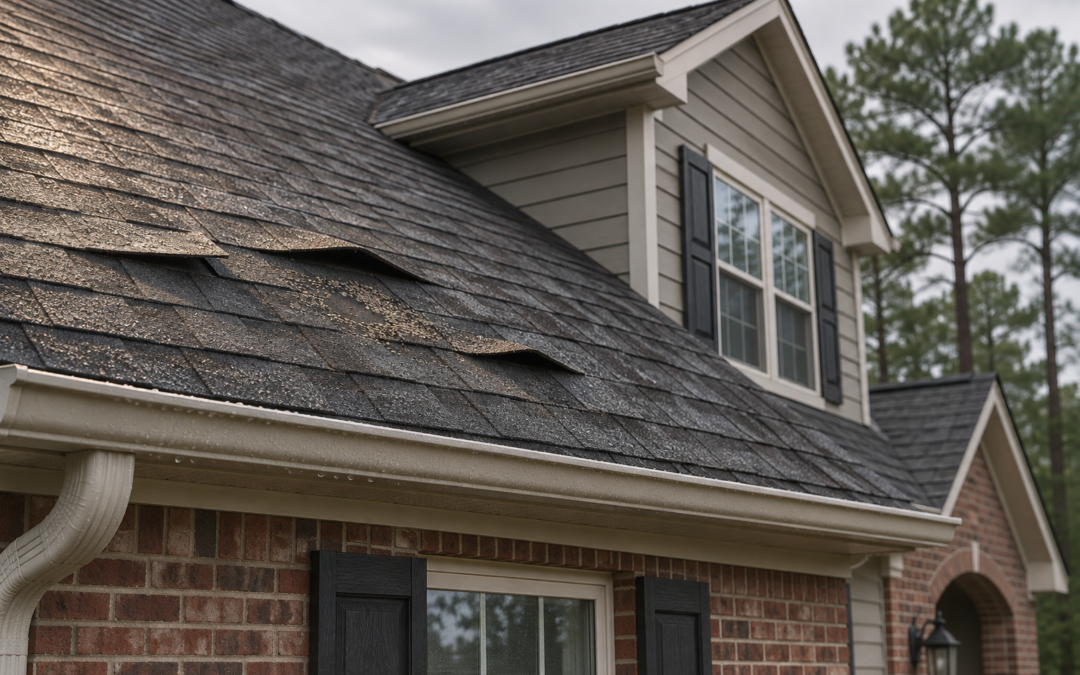
For most homes, gutter guards in Raleigh, NC are worth the investment, but the type you choose matters as much as the brand. Raleigh’s tree canopy runs heavy with loblolly pines, oaks, and sweetgums, and each drops a different kind of debris. The right guard reduces how often you clean; the wrong one clogs just as fast as an open gutter.
Are Gutter Guards in Raleigh, NC Worth It?
Gutter guards reduce cleaning frequency and help keep water moving away from your foundation during heavy rain. The Triangle area receives an average of about 46 inches of rain per year, according to the National Weather Service, and a blocked gutter can send that water straight down your fascia (the board running behind the gutter) and toward your foundation. The Insurance Institute for Business and Home Safety identifies blocked gutters as one of the leading causes of preventable water intrusion in homes, which is a strong argument for keeping them clear.
Guards won’t eliminate maintenance entirely. That’s the most common misconception we hear. Debris still collects on top of some guard types, and pine needles are thin enough to work through certain screen designs. What guards do is reduce the frequency of cleaning, not remove it entirely.
For a two-story home where cleaning means hiring someone, that reduced frequency is a real and recurring saving. For a single-story home with low gutters and minimal tree coverage, the math is different.
The Four Main Types of Gutter Guards
The best guard for your home depends on what’s falling on your roof, not on which product has the most marketing behind it. Each type works differently, holds up differently over time, and handles pine needle debris differently.
Micro-Mesh Guards
Micro-mesh guards use a fine metal screen, usually stainless steel, stretched over a frame that sits across the top of the gutter. The holes are small enough to let water through while blocking most debris, including pine needles. They’re the most effective option for Raleigh’s mix of pine needles and oak leaves, and they’re built to last. The tradeoff is cost: micro-mesh is typically the most expensive type to install.
Because the mesh is so fine, shingle grit (the small granules coating asphalt shingles that protect them from UV rays) can collect on the surface over time. A rinse once or twice a year keeps them flowing well. If you want to understand more about how granules protect your shingles, our post The Unsung Heroes of Your Roof: The Importance of Shingle Granules goes into detail on that.
Screen and Perforated-Cover Guards
Screen guards sit across the top of the gutter, similar to micro-mesh, but with larger openings. They block leaves and twigs well, but pine needles can slide through or bridge across the openings and eventually form a mat. They cost less than micro-mesh and suit yards with more hardwoods than pines.
Perforated covers are solid panels with small holes punched through them. Both types are easier to find at hardware stores. Professional installation ensures proper pitch and fit, which affects how well any guard drains.
Foam Guards
Foam guards are porous foam inserts that sit inside the gutter itself. Water soaks through the foam; debris sits on top and dries out, then blows away. The concept is simple, and the installed cost is low.
The problem in Raleigh’s climate is moisture. The foam stays damp through our humid summers, and it can grow moss or algae. Seedlings can root in the debris layer on top. Most roofing professionals treat foam guards as a short-term solution. If you have them now and they’re a few years old, they’re worth checking.
Reverse-Curve (Surface Tension) Guards
Reverse-curve guards, sometimes called surface-tension guards, are curved covers that guide water around a bend and into the gutter while debris is supposed to fall off the edge. They work well with large leaves. Pine needles are a consistent problem: they’re light and narrow, and they follow the water curve right into the gutter.
They’re also one of the more visible guard types from the ground because they extend outward from the gutter. Some homeowners find they affect the look of the roofline.
What Drives the Installed Cost of Gutter Guards
Installed cost depends on several factors, and any company quoting a number before seeing your gutters is guessing. Here’s what an installer looks at when building an estimate.
Home Size and Linear Footage
Gutter guard cost is priced per linear foot of gutter. A small ranch home might have 120 feet of gutter; a two-story colonial with a complex roofline can have 250 feet or more. More linear footage means more material and more labor time.
One-Story vs. Two-Story
Two-story work takes longer and requires more equipment. Ladder setup on a two-story home is slower and carries more physical risk for the crew. That labor difference shows up in your estimate.
Guard Type and Material
Foam and basic screen guards sit at the lower end of the cost range. Aluminum micro-mesh sits in the middle. Stainless steel micro-mesh with a heavier frame sits at the top. The National Roofing Contractors Association notes that material quality is one of the strongest predictors of long-term performance in roofing products, and that holds true for gutter guards.
For a broader look at what home exterior projects cost in this region, our post What Does a New Roof Cost in North Carolina? gives useful context on how material and labor interact in the Triangle market.
Your Tree Canopy
If your home has heavy pine coverage directly overhead, your installer may recommend a finer mesh and may need to clear the gutters before installing guards. That cleaning step, if your gutters are already packed, adds to the job. If your gutters are relatively clean and you’re scheduling before the fall drop, that step may not be needed.
Existing Gutter Condition
Guards go on top of your existing gutters. If those gutters are pulling away from the fascia, have seams that have opened up, or are the wrong size for your roof’s water volume, guards won’t fix those problems. An installer who doesn’t mention gutter condition before quoting isn’t giving you a complete picture.
Our gutters page covers what to look for before adding guards, and our post How to Know When Your Home Needs New Gutters in NC walks through the signs that your gutters need attention before guards go on.
When Gutter Guards Don’t Make Sense
Guards aren’t the right call for every home. Here are situations where you’d want to pause before spending the money.
- Your gutters need replacement. Installing guards on failing gutters is money you’ll spend twice. Fix or replace the gutters first.
- Your roof is nearing end of life. When the roof comes off for replacement, the guards come off too. If you’re within two or three years of a likely replacement, it may be worth waiting, or coordinating both projects at once.
- Your tree load is extreme. Some homes under heavy pine canopy find that even the finest micro-mesh needs frequent rinsing. Guards help, but the cleaning doesn’t go away entirely.
- You have a simple roofline and low gutters. If your home is single-story and your gutters are easy to reach safely from the ground with a hose, the cost-benefit math is different than for a two-story home where cleaning is a real hassle.
Our pre-winter roof and gutter checklist walks through the full picture of getting your gutters and roof ready before cold weather arrives, which is a good companion read if you’re deciding whether to add guards this season.
How to Choose the Right Guard for Your Home
Start with what’s falling on your roof, not with the marketing on the box.
- Walk your yard in mid-November. What’s on the ground? Mostly pine needles? Micro-mesh is your best option. Mostly large oak leaves? Screen or perforated covers can work and cost less.
- Check your gutter condition first. Look from the ground. Are they pulling away from the house? Are they overflowing at the seams during rain? Those are signs the gutters need attention before guards go on.
- Ask about pitch. Guards need to be installed at the right angle to drain properly. A guard laid flat can hold standing water, which defeats the purpose.
- Ask what maintenance still looks like. Any honest installer will tell you guards aren’t maintenance-free. Ask how often the type they’re recommending typically needs attention.
- Get the gutters cleaned before installation. Guards installed over packed debris just trap the debris in place.
Proper installation, including correct pitch and secure attachment, also protects your roofline. The National Roofing Contractors Association recommends that any work near the roof edge be done by a trained professional to avoid accidental damage to shingles or flashing (the metal strips that seal joints around vents and edges). You can verify that any contractor you hire holds a valid license through the NC Licensing Board for General Contractors.
Frequently Asked Questions
Are gutter guards worth it in Raleigh, NC?
For most Raleigh homes, yes, with the right type. Raleigh’s pine trees drop needles that clog gutters faster than broad leaves do, and the city receives roughly 46 inches of rain per year according to the National Weather Service, so keeping gutters clear matters. Micro-mesh guards handle pine needle debris well and can significantly reduce cleaning frequency. They’re not maintenance-free, but they’re a practical investment for two-story homes or any home where cleaning is difficult or expensive to schedule.
How much do gutter guards cost to install in Raleigh?
Installed cost depends on linear footage, home height, guard type, and gutter condition. Basic screen guards sit at the lower end of the range; stainless steel micro-mesh sits at the higher end. An in-person look at your gutters is the only way to give you a real number. Any figure quoted over the phone without seeing the home is a rough estimate at best.
Do gutter guards work on pine needles?
Some do, some don’t. Micro-mesh guards with fine stainless steel mesh are the most effective option for pine needle debris. Standard screen guards and reverse-curve guards have larger openings that pine needles can bridge or follow through. If your yard has significant pine coverage, ask specifically about micro-mesh before agreeing to any other type.
Will gutter guards eliminate gutter cleaning entirely?
No, and any company that promises they will is overstating the product. Debris collects on top of guards, shingle grit can accumulate on mesh surfaces, and occasional rinsing is still needed. What guards do is reduce how often full cleaning is required, which is a meaningful benefit on a two-story home where cleaning means hiring someone.
Can I install gutter guards myself?
Some screen and foam guard types are sold in hardware stores for DIY installation. On a single-story home with a stable ladder and someone spotting you, it’s manageable for a handy homeowner. On a two-story home, or any home with steep or wet conditions, the risk is not worth the savings. Professional installation also ensures proper pitch and fit, which affects how well the guards drain.
When is the best time to install gutter guards in Raleigh?
Late fall, after the main leaf drop but before sustained cold weather, is a practical window. Gutters are typically at their dirtiest after the fall season, so scheduling a cleaning and guard installation together makes sense. Early spring, after the pine pollen season, is a second good window. Avoid scheduling during rainy stretches when gutters are wet and debris is packed in.
Deciding on Gutter Guards for Your Raleigh Home
The right guard type depends on your trees, your gutter condition, and your home’s layout. A short on-site look is what turns that general picture into a specific recommendation.
Get your quote, no cost, no hassle, at wilsonandsonsroofing.com/contact-us or call (919) 787-3253.